Monday, February 10, 2014

The PC: Conformity, contrarianism and a craft writing symposium.

(Published at LouisvilleBeer.com on February 10, 2014)

---

Conformity, contrarianism and a craft writing
symposium.

by Roger Baylor
In my stray jigsaw-puzzle-piece of the planet, the coming weekend is utterly devoted to the city of Lexington, Kentucky.
I never once thought I’d write that sentence, but Lexington is where my mother attended the University Of Kentucky, which is hosting an event called “Craft Writing: Beer, The Digital, and Craft Culture,” among whose participants I have been included by the symposium’s organizer, Jeff Rice.

Sunday, February 09, 2014

On "Halfway to Louisville Craft Beer Week" and John King's family tree.


I sincerely hope Deep Purple isn't contemplating a punctuation trademark infringement war against the folks at LouisvilleBeer.com, where going halfway is described in detail.


Halfway to Louisville Craft Beer Week?!

Yup, we're halfway there and we'll be celebrating!

Craft beer drinkers are an impatient bunch, including us. With great success from our 4th annual Louisville Craft Beer Week combined with the expanding craft beer scene in Louisville, we decided to take four days in April to showcase that Kentucky is known for more than just bluegrass and bourbon in the spring time.

Louisvillebeer.com will be working with the Kentucky Guild of Brewers, local beer bars, and restaurants to promote our thriving craft beer culture in a citywide celebration of local and regional craft beer. Halfway to LCBW is an effort to enhance localism, beer knowledge, and appreciation of the positive growth of the Kentucky craft beer industry.

This four-day event (April 16th-20th) will include events like special beer releases to tap takeovers to beer dinners and anything and everything Kentucky craft beer related. After acquiring sponsorships, we will produce a condensed version of our Craft Beer Guide which will detail every event. Mark your calendars down and expect to here from us in the near future.

On a side note, we have already set the dates for the 5th Annual Louisville Craft Beer Week as September 12-20, 2014!

If you're interesting in a sponsorship or an ad in the guide, please contact SCOTT LYKINS at 502.494.1551 or email Scott@LouisvilleBeer.com.


Meanwhile, LouisvilleBeer columnist and co-conspirator John King recently sketched his family tree, but in a way meant to defer implied Kentucky punctuation. Congratulations to John for landing the gig as major domo of the KGB.


Craft Beer Roots

by John King
I tend to get my best ideas and most coherent thoughts while out on a run.  After sticking my hand in many cookie jars throughout the work day, it’s my hour to just reflect (or realize I should have went to the bathroom before I stepped out the door) on what’s going on in my life.   Last night while trying not to slip on ice and bust my ass/head/anything, I started to think about my craft beer family tree and how it led to where I am today in the beer community.  With that, let me describe a little bit of my journey that found me in my most recent acquired position of Executive Director of the Kentucky Guild of Brewers.

Saturday, February 08, 2014

Intellectual honesty as it pertains to Goose Island's entirely necessary multinational hash tag.


What's that intellectual honesty egghead horseshit, Rog -- I mean, all we care about is the liquid in the glass, and we don't give a fuck who finances it.

Thank you, narcissists. Meanwhile, back in the real world, in determining whether it's Goose Island or Trojan Goose, geography is only somewhat useful.

More relevant is the eternal admonition to follow the money.

Failure to do so conjures questions of intellectual honesty, as in this plank: 'Relevant facts and information are not purposefully omitted even when such things may contradict one's hypothesis."

Intellectual honesty is an applied method of problem solving in academia, characterized by an unbiased, honest attitude, which can be demonstrated in a number of different ways, including but not limited to:


  • One's personal beliefs do not interfere with the pursuit of truth;
  • Relevant facts and information are not purposefully omitted even when such things may contradict one's hypothesis;
  • Facts are presented in an unbiased manner, and not twisted to give misleading impressions or to support one view over another;
  • References, or earlier work, are acknowledged where possible, and plagiarism is avoided.
  • Harvard ethicist Louis M. Guenin describes the "kernel" of intellectual honesty to be "a virtuous disposition to eschew deception when given an incentive for deception."


Intentionally committed fallacies in debates and reasoning are sometimes called intellectual dishonesty.

For an explanation of the local multiplier effect, elements of which surely apply to this digression, visit a place where principled folks make interesting points: The Multiplier Effect of Local Independent Business Ownership.

Hint: It isn't located at Rate Advocate's web site.


Friday, February 07, 2014

The Gralehaus. "From the same people who run Holy Grale."

It is without the slightest tinge of irony, and absent any discernible snark, that I say: I live vicariously through what Lori Beck, Tyler Trotter and their staff have done at the Holy Grale, and now the Gralehaus. They are not necessarily new or original ideas, but this is not the point at all; they've painstakingly realized these ideas, refined and built and implemented them, and deserve all the plaudits they receive now and in the future for doing so.

Congratulations, salutations and best wishes.

I wouldn't be human if I didn't concede a measure of bittersweet reflection. I've wanted to do something like the Gralehaus since those early days in Europe. For 1,001 reasons, ranging from serendipity through circumstance, and not omitting the very palpable fact that I've had neither the money nor the aptitude to pretend otherwise, it was not to be.  So it goes, with no tears shed and rear-view mirrors reduced to shards with a hammer. But my enthusiasm for the Grale empire is absolutely sincere. I've always known it was possible, and I'm simply elated that they've gotten it done.

Keep on rocking, guys.

The much-anticipated Gralehaus opens today, offering a new take on breakfast and lunch fare, by Steve Kaufman (Insider Louisville)

Wednesday, February 05, 2014

Fare thee well, Blue Point; may the multinational brewing assassins at AB InBev stuff your gills full of cash.

If you can find anything remotely craft-like in the following paragraph, if nothing else it at least proves you are fluent in modern multinational corporate-speak.

Congratulations for that ability, and kudos to Trojan Blue Point for cashing in. Maybe Blue Point and Goose Island can do a collaboration brewed in Leuven.

Wouldn't that be something. It could be called Two Zombies in Belgium.

Anheuser-Busch InBev to acquire Blue Point Brewing Company (Beer Pulse)

... “As we welcome Blue Point into the Anheuser-Busch family of brands, we look forward to working with Mark and Peter to accelerate the growth of the Blue Point portfolio and expand to new markets, while preserving the heritage and innovation of the brands,” said Luiz Edmond, CEO of Anheuser-Busch. “With Anheuser-Busch’s strong beer credentials, we share a commitment to offering high-quality beers that excite consumers. Blue Point brands have a strong following and even more potential.”

Tuesday, February 04, 2014

Idle 1980s thoughts about bad beers and old men.

I was thinking back to when my love affair began ... with bars, taverns and watering holes. It was before I began traveling, so these were the local spots -- some of them dives, others with slightly more dignified pretensions.

Seeing as I was just south of 21 when it started, pretty much all the patrons were older than me, and it seems that when it came to the old men, who in retrospect probably meant anyone older than 40, most of them were drinking traditional manly, old-man beers like Pabst, Sterling and Miller High Life.

At some point shortly thereafter, when I was in my mid-twenties, I became aware that almost all of them had switched to Lite, Bud Light and even Old Milwaukee Light. Price seemingly wasn’t the issue; if anything, they’d traded up and were paying more to cover the cost of Miller’s and Bud's television ads.

After long consideration, I concluded that a lifetime of Sterling and City finally had gotten to them, and when they realized that light beer was socially acceptable to their peers, under the rationalization that it was less filling, thus enabling them to drink even more beer than ever before, they fled their traditional brands as fast as their terminally damaged taste buds would carry them. Better the nothingness of wet air than something terminally foul ... and you could hear the sighs of relief in air-conditioned lounges and softball fields all across the nation.

It pleases me that local brands like City and Sterling are back, in altered form; in short, drinkable. The Pabst renaissance over the past two decades as yet puzzles me. It tastes nothing like the Pabst I remember. In fact, it tastes like nothing at all.

Wait, I forget; that's the point, isn't it?

Monday, February 03, 2014

The PC: On Sheryl Crow, the bourgeoisie and Flat12.

(Published at LouisvilleBeer.com on February 3, 2014)

---

The PC: On Sheryl Crow, the bourgeoisie and Flat12

by Roger Baylor
It is widely believed that noted philosopher-singer Sheryl Crow was the first observer to astutely detect the oxymoronic existence of a concept called “favorite mistake,” which she proceeded to describe:
“The perfect ending, to the bad day I was just beginning.”
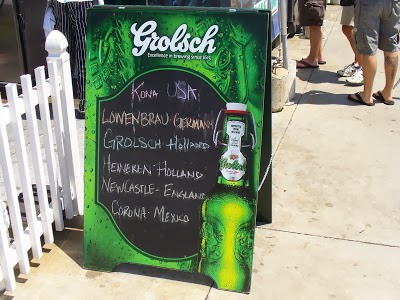
For the uninitiated, an oxymoron is a figure of speech that juxtaposes seemingly contradictory elements into understandable obscurity. Famous examples include military intelligence, jumbo shrimp, “hurts so good,” and Kona craft beer.
Hearing Sheryl Crow’s old song playing on tinny, crackling outdoor speakers while waiting to pump some petrol got me thinking, and as such idling thoughts tend to go: Might there have been a “favorite mistake” occurring at some point during my career in beer?

Diary: Evolution is a funny thing.

For a great many years, my preferred method for coping with stress was to binge with considerable panache on food and drink. If I could toss sex into the equation I would, but it wouldn’t fool anyone, would it? At one time, travel fit this pattern of excess.

December of 2013 was as stressful a month professionally as I can recall, and to be sure, there was feasting and guzzling amid the holidays. They occurred with a degree of unease; a few times previously in my life, I’ve voluntarily “rehabbed” myself because of physical discomfort, and yet this time, it was more of a psychological matter.

I called a halt to the revelry on January 1, and am down 17 pounds since then. As noted oft times before, there is no secret to losing weight, at least for me. Enhanced exercise, smaller portions of the same food, and a reduction in beer intake. It’s simple, and dreadfully difficult.

The hardest part about reduced alcohol intake is a double-edged sword effect. After a couple of days, I find that all aspects of mental acuity surge upward. There is vastly enhanced clarity … but who really wants to see this miserable, pain-filled, stupid world so clearly?

I’m fortunate to be in a committed and loving relationship, and so the home front has been good. She keeps me rooted. However, just about everything outside the boundaries of my house is more crazily unsettled. My mom needs more help than she used to. The city of New Albany is an infuriating, dull laggard of an entity, resistant to change.

At work, we’re trying to reinvent BSB in mid-air entering into a second five-year plan, and of course, figure out some way to sell more of our beer in a “craft beer” market that makes very little sense, and which seems determined to lapse into intellectually sclerotic self-parody.

Coping with the demands has been draining. Take it from a guy with an SAT score of 680 verbal, 320 mathematics: Being expected to endlessly crunch numbers is agony, and since last fall, I’ve done more of it than ever before. Numbers look like an impressionistic painting to me, and always have. Bankers hover, leering. Capitalism oppresses. I’m ready to scream, stuck in a horror movie of math.

Rather than scream, I’m ready for a good, long, intense binge, filled with pints of beer, bottles of Scrumpy, fried chicken, clam sauce, ribs … and curiously, I haven’t taken it -- at least yet.

Maybe at the age of 53, it’s a sign of maturity. I’m reminded of my first trip to Europe at the age of 24, shy and inhibited and completely overwhelmed. I drank a bit here and there; a few beers, a glass of wine and some ouzo. It was a whole month into a three-month stay before I felt secure enough to get plastered, and when I did, I was in the company of my cousin, in a small town, away from the city lights.

The past six months have been tantamount to some sort of ancient video game. Issues keep popping up, and being shot down or disabled, and then more of them pop up in place of the first wave. The trigger finger is bent backward, and the barrel is white hot. I’m not sure when I’ll feel secure enough again to relax my guard, and to escape from this perpetual cycle of emergencies.

This is my theory for why I’m largely refraining from drink. Responsibility and adulthood. But I’m not sure I like it much. At the same time, I don’t dislike it. The few beers I’ve had since December were great. I’ve greatly enjoyed recent tastings, when small nips suffice just fine.

Someday, things will be back to normal, won’t they?

Sunday, February 02, 2014

The NABC crew before Winterfest 2014.


From left to right: Tony Beard, Ben Minton, Blake Montgomery and Josh Hill. They're holding court at Twenty Tap, one of our Indy faves. I especially like the many examples of Tony's art hanging on the rear wall.

Saturday, February 01, 2014

Friday, January 31, 2014

Gravity Head 2014 updates are up.


I'm using a page at the NABC web site for this year's updates. We're less than a month away, the roster is fairly complete, and you can view it here:

Gravity Head 2014: The Bullet Train to Blackout Town leaves the station on Friday, February 28

Thursday, January 30, 2014

More on Flat12's project on Jeffersonville.

We took a brief glance at Flat12 Bierwerks' Jeffersonville plans yesterday at NA Confidential. Here's a closer look, with more pertinent information ... as in, brewing will be done on site.

---

Indianapolis brewer plans taproom on Jeffersonville riverfront; Indy-based brewery to offer new beer selections, by Elizabeth Beilman (News and Tribune)

JEFFERSONVILLE — A new business will be on tap later this year to join a handful of others opening near the Big Four pedestrian bridge.

Flat 12 Bierwerks, a craft brewery based in Indianapolis, announced its plans to open a taproom in downtown Jeffersonville at 130 W. Riverside Drive. The business will be located in the warehouse connected to The Olive Leaf, which also is opening soon, according to Olive Leaf owner Jimmy Shraby.

... The new taproom is the brewery’s first satellite location and will have all the brews available in Indianapolis on tap, in addition to beers brewed on site that will be unique to Jeffersonville ...

... Roger Baylor, co-owner of The New Albanian Brewing Co. in New Albany, said he is looking forward to sharing the area with another brewery.

“We’ve been tight with the Flat 12 guys since they were founded in 2010,” he said. “They’re a lot of fun, so it sounds to me like the whole thing is going to be a lot of fun.”

Baylor said Southern Indiana is ripe for the craft beer scene because of its proximity to Louisville, which just started receiving Flat 12 distributions at its restaurants in the last week.

“This is an Indiana brewery seeing the value of the metro market,” he said. “This is an indication of something I’ve been saying for a long time.”

Indiana breweries at Winterfest 2014.

Add the 20 out-of-staters, and that puts the number at roughly 72 breweries participating in this year's Winterfest. It is my understanding that on-line tickets are gone, so if you're near a Big Red store somewhere, ask (update; as of 8:00 a.m. Thursday, Big Red says remaining tickets are being sold at the company's Broad Ripple location).

18th Street Brewery
450 North Brewing Company
Back Road Brewery
Bare Hands Brewery
Barley Island Brewing Company
Bier Brewery
Big Dawg Brewhaus
Black Acre Brewing Company
Black Swan Brewpub
Bloomington Brewing Company
Broad Ripple Brew Pub
Brugge Brasserie
Bulldog Brewing Company
Carson's Brewery
Chapman's Brewing Company
Crown Brewing
Cutters Brewing Company
Danny Boy Beer Works
Daredevil Brewing Company
Evil Czech Brewery
Figure Eight Brewing
Flat 12 Bierwerks
Fountain Square Brewery
Great Crescent Brewery
Half Moon Restaurant & Brewery
Hawcreek Brewing Company
Iechyd Da Brewing Company
Indiana City Brewing Company
Lafayette Brewing Co
Mad Anthony Brewing Company Inc
New Albanian Brewing Company
Norris English Pub llc
Oaken Barrel Brewing Company
Outliers Brewing Company
People's Brewing Company
Planetary Brewing Company
Power House Brewing Company
Quaff ON! Brewing Company
RAM Restaurant & Brewery
Rock Bottom--College Park
Salt Creek Brewery
Shoreline Brewery
Sun King Brewing Company
Thr3e Wise Men
Three Floyds Brewing Company
Three Pints Brewing
Tin Man Brewing Company
Triton Brewing Company
Turoni's Main Street Brewery
Union Brewing Company
Upland Brewing Company
ZwanzigZ Brewing

Wednesday, January 29, 2014

Diary: Hopslam and Hoptimus, sans "versus".


Just the other night, I had the unexpected opportunity to sample Bell’s Hopslam Ale and NABC Hoptimus side by side. I know too much for it to have been a blind taste test, but it didn’t need to be, seeing as Hopslam and Hoptimus are so very different from each other even if both are lumped into the “Imperial” IPA category.

Hopslam is released once a year by Bell’s, a brewery in Michigan. Hoptimus is available year-round from NABC, a brewery in Indiana (my brewery, of course).

Hopslam uses different hops (six varietals and Simcoe) than Hoptimus (Cascade). Hoptimus is deceptively drier, and Hopslam is malty sweet.

They both cost a lot to make, and neither is cheap on a store shelf.

My verdict? They’re both good, but markedly different.

Do you like basketball or rugby? Maybe both, depending on the mood, although beer and sports aren’t the same animal. Sports possess an objective system of measurement called “keeping score.” Beer has a wonderful tendency to lapse into flights of the subjective, fueling stories and irreconcilable bragging rights, which is why beer is good while viewing sports.

Hopslam and Hoptimus. Enjoy one, the other, or both.

Tuesday, January 28, 2014

NABC’s Hoptimus Inception Reception is at Bank Street Brewhouse on January 31, 2014.


Now that I know Peter can write, it's time to begin squeezing out some copy. Meanwhile, we're having a birthday party for Hoptimus, and why not? It's NABC's biggest selling off-premise brand, and has been since our second brewing location opened in 2009. I'd be interested to know how Hoptimus ranks in sales among locally-brewed, year-round Imperial IPAs in the Louisville market. I suppose this begs the question: Are there any others?

NABC’s Hoptimus Inception Reception is at Bank Street Brewhouse on January 31, 2014, by Peter Fingerson, NABC Brewer

While many of the facts of Hoptimus’s remarkable birth (rather, its immaculate inception), remain unknown, it can be said with inimitable truth that Hoptimus is a beer of the utmost merit. Even from its fledgling beginnings, the beer had a mind with its own agenda: It was determined to leave a mark on the craft beer scene, and it has done just that.

Monday, January 27, 2014

The PC: A craft beer toast to opposing HJR-3.

(Published at LouisvilleBeer.com on January 27, 2014)

---

A craft beer toast to opposing HJR-3

Seated amid the cheesy 1960s-era veneer that delineates New Albany’s primary civic meeting room, idly monitoring a city council meeting, I was wishing there’d have been time at The Exchange for a third martini (sweet Jeeebus, why don’t they run a cash bar at functions like this?), when suddenly a beer discussion broke out on Twitter. My two cents quickly dispensed via the miracle of the iPhone, it was back to the numbingly predictable provincial political skullduggery

Then a friend tweeted.

“You own a brewery? I thought you were a city engineer or something.”

Sometimes I wonder myself.

Craft Writing symposium: It's fine by me if craft beer gets all introspective.


This is going to be fun. I've lost 15 lbs since January 1, and quite possibly will gain all of it back this weekend alone. I'm also looking forward to the possibility of pre-symposium time with Stan Hieronymus; the last time was in 2006 in Albuquerque, right?

Business: Craft beer gets introspective with UK symposium, by Janet Patton (Lexington Herald-Leader)

The craft beer movement isn't built on hops alone: Writing and social media have played a major role in promoting craft beer, according to a University of Kentucky professor.

"Craft Writing: Beer, the Digital, and Craft Culture" is the brainchild of UK writing, rhetoric and digital studies professor Jeff Rice, who will host a one-day symposium Feb. 15.

On the event's website, Rice lays out the case for craft beer as an academic topic ...

For those contemplating attendance, here are the plain facts.

If you go

Craft Writing: Beer, the Digital, and Craft Culture

When: 10 a.m. to 5 p.m., Feb. 15

Where: Center Theater, University of Kentucky Student Center

Cost: Free. Register online at http://craftwriting.as.uky.edu/

Get-together 9-10 p.m., Feb. 14, Country Boy Brewing, 436 Chair Ave.

Beer crawl after symposium to visit The Beer Trappe, 811 Euclid Ave.; Lexington Beerworks, 213 N. Limestone; West Sixth Brewing, 501 W. Sixth; and Blue Stallion Brewing, 610 W. Third St

Sunday, January 26, 2014

Diary: Swill, inferiority, and the irony-free priestly caste.

My diary entries are designed to accommodate venting without excessive rhetorical polish. They may or may not go on to become columns.

It was asked by a neophyte who might be expected to know better, "Should I drink local swill just because it's local."

Clarification was requested of her, which yielded this: "Swill might have been too harsh, but if I prefer the taste of Hopslam to Hoptimus, should I drink the inferior Hoptimus just because it's local?"

There followed a digression, in which I was asked whether trade sanctions should be imposed against non-local beer. I yawned at the predictable over-simplification of the sort that usually occurs when previously unused muscles are stressed, and gave it a stab.

No, I'm not saying there should not be out of town beer.

Rather, I'm making a snide aside with reference to the inevitable hosannas that greet the arrival of beers from elsewhere; most recently in Louisville, these would range geographically from Mississippi to Georgia to Oregon.

Yes, I still try lots of different beers in a year, and objectively speaking, perhaps one of every ten of these is genuinely memorable -- which is not to say they're inferior swill. To the contrary, most are quite nice, and nationwide, craft beer quality is pretty darned good overall ... but outstanding examples of any particular style are few and far between. Even rarer are instances of objectivity when it comes to judging them, What we see instead are outbursts of Beatles-at Shea pandemonium and a few more notches on Rate Advocate.

I'll take the fresher IPA from nearer to here, rather than subscribe to the notion that the ideal nirvana-like state for beer appreciation is reached when beers traveling thousands of miles by 18-wheeler pass one another on lonely interstates, racing in opposite directions.

That's because building localism interests me. Trucking companies and circle jerks do not.

But really, I can't help adding that the knee-jerk use of words like "swill" and "inferior" assists greatly in making my point, and points to a desperate need for gadflies now that a new orthodoxy is being erected. In any espousal of economic localism I've ever uttered, not once have I suggested that one should stoop to drinking inferior beer. What I have consistently suggested is that determinations of inferior vs. superior are often being made for every other reason except objective comparison.

Thirty years into beer as a profession, and it's increasingly clear to me that while people think they're being objective, they're mostly being subjective. If we couldn't see the packaging, didn't know the "official" ratings before lifting the glass, and tasted all these various excellent beers blind -- local, imported or Martian -- we'd discover very few differences in those ordained as chic and others derided for being local. It would be highly instructive, and as Lord Cornwallis once observed, the world would be effectively turned upside down.

But I am grateful for all comments. It is my intent is to solicit them. That's because my overall aim is to promote thinking, the paucity of which among today's beer enthusiast is cause for consternation.

Saturday, January 25, 2014

Diary: I'd rather see their asses starve than let them have Trojan Goose money.

Two fat cat AB InBev shareholders are at the teller's window cashing their dividend checks, and one says to the other: "You know what's funny?"

The other says, "No, what?"

The first one says: "All the beer snobs used to call us crap, and now they say we're craft, and all we did was buy one of their breweries."

As I wrote last year, and seeing as nothing has changed in what increasingly appear to me as diametrically opposed "craft" camps of localism and narcissism:

You’re free to deny reality until the end of time, but Goose Island is a wholly-owned subsidiary of the beer world’s largest extortionate conglomerate, and it contradicts virtually every tenet of my daily business existence.

Of course, if one is not engaged in owning an independent business and seeing what economic localism means on the ground, in this place and time ... well, you know.

Friday, January 24, 2014

Upland opposes HJR-3. So does NABC. So should BIG.


I'd like to thank our longtime friends at Upland Brewing Company in Bloomington for understanding that beer isn't consumed in a vacuum, and publicly joining the struggle against HJR-3.

What is HJR-3?

HJR-3 (formerly HJR-6) is a proposed amendment that would permanently alter the Indiana Constitution to define marriage and could potentially affect hundreds of rights related to marriage under current Indiana law.

In the 2014 legislative session, Indiana lawmakers can choose either to table or vote down the amendment or send it to voters for a statewide referendum next November. If it does not pass or is not called for action, our Constitution will be protected.

In addition to the duplicative and restrictive first sentence of the amendment, no one has been able to clearly define what effects the second sentence would have on existing marriages, domestic partner benefits, human rights ordinances, legal contracts and benefits for unmarried couples.

As a progressive beer guy, it's a confusing time for me.

Republican legislators have been quite friendly when it comes to advancing the interests of craft brewing in Indiana, among them New Albany's own Rep. Ed Clere (District 72). At the same time, the very notion of HJR-3 is potentially damaging to businesses like ours. Rep. Clere is rare among Republicans in that he has opposed HJR-3, and for this we're appreciative. His colleagues supporting HJR-3 are doing so against the wishes of businesses far larger than any brewery, including Eli Lilly and Cummins.

That's right: Republicans legislating against the interests of Indiana business. Verily, it is a strange world we inhabit.

It's my view that if this madness goes to the voters, the Brewers of Indiana Guild as a whole should publicly and emphatically reject it. Upland currently does not have a director on the board, so I'll happily be the one to make the motion. Let's hope it doesn't come to this, and the Indiana GOP somehow becomes reacquainted with the notion of sanity.

Moreover, if craft beer doesn't embrace what's right and reject what's wrong, why are we bothering?

Thursday, January 23, 2014

"We're giving fans what they want," except at Louisville Slugger Field.

A local insider forwarded this article to me, as transmitted via Craft Business Daily.

I hear periodic rumors that the lamentable situation at Louisville Slugger Field will change for the better during the forthcoming Louisville Bats campaign, but much like human rights in North Korea, it's best not to believe Gary Ulmer and Centerplate until they actually do something. Since there is no substantive record of action to improve beer choice and to grasp the utility of local beer for local sports, my advice in 2014 is the same as in the past: Don't hold your breath; it deprives you of much-needed oxygen and does nothing to alter their purely mass-market instincts.

The Sahara of Slugger Field (LouisvilleBeer.com; April 15, 2013)

However, in 2013 the beer-loving stewards of the stadium are giving us something even worse: Taste the Best of Belgium, a stand-alone beer kiosk featuring Hoegaarden, Stella Artois and that other universally known Belgian masterpiece, Bud Light, as guaranteed to give Centerplate, the Bats front office and AB-InBev’s foreign management the very first sustained tumescence, sans-Viagra, that they’ve welcomed in decades.

Now, read about sports venues in the modern world.

---

Craft Becoming Major Contender at Sports Venues (Really)

If this Sports Business Daily piece is right, sports venues are a lot more craft-centric than is apparent, and growing. Ovations Food Services executive VP Doug Drewes told the outlet that craft beer now represents 25% of total beer sales at its facilities, while import beers have another 25% share. Its facilities include 100-plus convention centers, fairgrounds, casinos and stadiums across the United States. "We're giving fans what they want, and it's turned into a 50-50 mix throughout the industry now," Doug said.

(In fact, Ovations is becoming a craft brewer too. The concessionaire is developing "its first brewery at Jungle Island, a tropical theme park in Miami," per a related Sports Business Daily story. It's not an isolated venture: "Ovations officials believe they could partner with teams to develop microbreweries at arenas and stadiums.")

Giant concessionaire Aramark told the outlet how it has seen craft grow at its 11 Major League Baseball accounts: Vice president of marketing Andrew Shipe said 69% of consumption at baseball fields still comes from A-B and MillerCoors. "But over the past three years, there has been a shift of 5 share points and now the craft beer category is worth about 20%," he said. "Ten to 15 years ago, that category hardly existed." He believes domestics will continue to decrease in share based on industry data and their own trends. (Interestingly, a December Turnkey Sports Poll of 2,000 senior level sports executives revealed that 34% would be "more likely to buy" a 12 oz. craft beer for $7 at a large sporting event, while 47% said they'd be more likely to buy a 16 oz. domestic beer for the same price.)

To these guys, the economics are easy. Centerplate, which serves the Denver Broncos' Sports Authority Field at Mile High, has seen taps dedicated to pouring crafts at Broncos games jump from 15% to 21% over the last three years, and craft has even more share if you count its bottles and cans. They've also opened two craft-centric, 50 yard-line bars this season as part of $32 million in upgrades at the field. But at $8.25 per 20 oz. craft draft to $6.25 for a domestic at Broncos games, "the allocation speaks for itself," per Justin Kizima, Centerplate's general manager at Sports Authority Field at Mile High.

And many sports arenas are converting underperforming areas to craft venues, which often end up "churning out sponsorship dollars for teams such as the Bobcats and Pistons to cover the cost of converting those areas."

Wednesday, January 22, 2014

Local illustrations, local beer. Artists here, not there.


Localism in design, localism in beer. Beer and design driving home the message of localism. In such a fashion, we revel in opportunities to refocus the attention of radical beer geeks on the places where they actually live and work.

Magazines, websites and ads using more of local artists' handiwork, by Matt Frassica (Courier-Journal)

... Illustrators, and the companies that solicit their work, say they’ve seen a renewed interest in hand-drawn illustrations, such as cartoons, because they often capture people’s attention and can drive home some kinds of messages better than photography.

Publications such as LEO and Louisville Magazine frequently showcase local illustrators.

NABC's Tony Beard is included among these, as is Robby Davis, who designs labels for Against the Grain.

Across the river at the New Albanian Brewing Company, Tony Beard started with the company 10 years ago, working in the kitchen. But his boss, Roger Baylor, found out about his drawing hobby and asked him to design a logo for Hoptimus, an imperial pale ale. Beard gave the beer a Transformers-inspired robot in yellows and oranges.

Tuesday, January 21, 2014

In which I offer friendly advice to the good people at Headliners Music Hall.

If the question is, "How does the locally owned and operated Headliners Music Hall compete against Live Nation-owned and -operated Mercury Ballroom?", then the answer is this:

Headliners needs to be MORE local than Mercury.

Not that Headliners isn't locally oriented already. In many ways, it is. The point, and my not necessarily unbiased advice: Be even more so. As much as possible. And rub the corporate entity's nose in it.

Restricting the focus to beer: Every multinational starter beer being served at Headliners negates the venue's argument v.v. Mercury's corporate advantages. Yes, of course the Headliners bar must make the customers happy and reap the mark-up whirlwind. But karma can be quite the bitch, and we've seen from our temporary experience with Houndmouth beer at Houndmouth's show that local products can compete. Craft beer, craft music. Forecastle can't or won't do it; Headliners should.

Some Headliners loyalists apprehensive over opening of the new Mercury Ballroom music venue, by Michael Tierney (Insider Louisville)

Developer Bill Weyland‘s CITY Properties Group and Live Nation have teamed up in Louisville to open the Mercury Ballroom. Though the new music venue isn’t set to open until April, its concert calendar has already sparked concern over how the locally owned Headliners Music Hall will be affected.

Jeffery Smith runs Crash Avenue, a locally owned media and management company with offices in Louisville and New York City. Last week Smith posed this question on Facebook, stirring the pot in the Louisville music scene:

Do you boycott Mercury Ballroom because they’re going to be in direct competition with our locally owned / local fave Headliners Music Hall? Understand, they’re going to be competing for the same talent coming through Louisville… but Live Nation has the money to essentially throw at the talent until they drown out the competition. If you’re going to be diligent about eating locally, should you not be diligent about extending where you choose to take in your smaller national acts?

Insider Louisville interviewed Smith, who claims Live Nation — the publicly traded (NYSE, LYV), Los Angeles-based entertainment company — may snatch a market that Billy Hardison built.

Hardison owns Headliners and is a partner in the local talent-buying agency Production Simple, alongside Joe Agabrite III, John Grantz, and Lizi Hagan ...

Diary: I know just how Lenin felt.

During the Soviet Union's latter stages of terminal illness, there was a joke told about its founder, Vladimir Ilyich Lenin, which went something like this.

Soviet scientists manage to solve the problem of bringing the dead back to life, and immediately apply the new cure to Lenin's waxen, embalmed body. They are giddy as he slowly comes to consciousness. Asked what he needs first, Lenin replies: "Show me to my old office, and bring every issue of Pravda published since my death."

This is done, and as he closes the office door, he gives orders not to be disturbed.

Several days pass, and Lenin never once reemerges from the office. Scientists and party hacks become worried, but are afraid to defy the re-animated leader's strict orders to be left alone. Finally they can stand it no longer, and barge into Lenin's office. Newspapers are strewn about, but he is missing. On his desk is a note.

"Comrades, I've gone to start all over."

Monday, January 20, 2014

The PC: Scoreboard daze of old.

(Published at LouisvilleBeer.com on January 20, 2014 ... it's an updating of an old newspaper column)

---

Scoreboard daze of old.

There used to be a package liquor store called Scoreboard Liquors on West Spring Street in downtown New Albany. I worked there part-time from 1982 through 1988, when the store moved to a different location, a couple of miles uptown. In fact, I continued to work at Scoreboard after the move, but to tell the truth, it was never the same as at the old downtown location.

Scoreboard’s downtown building directly faced the federal courthouse, and it was within spitting distance of numerous bankers, lawyers, title abstractors and others performing their time-honored roles amid the daily antics of a county seat in seemingly terminal decline. For a lad from Georgetown, working the package liquor trade in the core of the historic business district was both a kick and an education.

Sunday, January 19, 2014

How to properly report the prospect of beer and wine at the Indiana State Fair.

If I had seen Chris Sikich's Indy Star article first, yesterday's post wouldn't have been made. This account is far better, and entirely non-flippant.

Has there ever been a better example of Indiana's fundamental weirdness than a state legislature banning beer and wine from the state fair because of littering?

Ban on alcohol at State Fair may end

Would you like to enjoy a cold beer or glass of wine at the Indiana State Fair?

The prohibition on alcohol sales at the fair, which has lasted more than six decades, may soon be coming to an end, thanks to changing attitudes and growing support for an emerging homegrown beer and wine industry.

Enacted in 1947 as a reaction to fair litterbugs, the ban is now considered by some to be an outdated vestige of blue laws that ought to be discarded.

Increasing support from State Fair officials, craft beer and wine producers, and some key state legislators makes overturning of the ban a stronger possibility this year, despite failed attempts in the past.

Saturday, January 18, 2014

Beer and wine normally are not known as "booze", unless you're a yellow journalist.

You really have to wonder about the headline.

"Booze."

The attitude overall is flippant, beginning with the opening sentence. Then again, does journalism really exist any longer? Let's begin at the beginning, where the word "Indianapolis" is misspelled.

Booze could be Indiana state fair's newest attraction, by Hannah Troyer (TheStatehouseFile.com)

INDIANPOLIS — Those craving to wash down their serving of fried butter with a cold beer at the Indiana State Fair may soon have their wish granted.

Senate Bill 168, authored by Sen. Jean Leising, R-Oldenburg, would allow the sale of alcoholic beverages during the State Fair.

“Because of the current statute in place, during the State Fair no alcohol can be sold. We have microbreweries and wineries that really would like to not only be able to display their products, but to sell their products,” Leising said. “That’s what I’m trying to make happen. It will be interesting to see if I can get support. It’s one of those common sense bills, I think.”

Hmm, that actually is sensible. And why is Indiana's one of only two state fairs nationwide to espouse Prohibition?

Alcohol was prohibited after the state fair of 1947 because, instead of throwing their beer bottles away, patrons littered the fairgrounds.

Of course, the prohibitionists never really die. They just slither back from behind a different rock.

While supporters believe the change will be positive, critics — including Drug Free Marion County — said the possible sale of alcohol is an issue. The group says the beverages may cause problems and threaten the “family-friendly environment” the state fair promotes.

“We feel that it brings along too many problems,” said Nancy Beals, prevention project coordinator for Drug Free Marion County.

It's important to remember, as Sen Leising specifies, that the bill concerns beer and wine made in Indiana. Bud, Miller and Coors cannot play. They'd like to. That's the part of genuine concern.

Friday, January 17, 2014

Diary: On finding your market, because that's what you have to do, or you die.

My diary entries are aimed at capturing moments of consciousness without my habit of editing, writing, and re-writing. These thoughts may later lead to a finished essay. Or not.

---

Like many others, I tended in the past to look approvingly at statistics documenting craft beer growth, and always came away from it encouraged. During the past couple of years, I started to be more skeptical. It’s all good, but maybe not always.

It comes down to veering away from the simplistic habit of viewing growth as an all-in statistic. Yes, rising tides continue to lift all boats, although perhaps not as much as you’d assume, given that craft beer is sufficiently mature to be multi-faceted. Sierra Nevada’s $15 twelve-pack of Pale Ale at Target is one segment. The sours of Jolly Pumpkin are another. Brewpubs without packaging apart from growlers form yet another market-within-a-market.

In 2009, NABC went from being a brewpub to producing enough beer to distribute outside. We looked at the preferences of our in-house consumers, and at the market outside our walls, and borrowed enough money to produce certain beers at a certain level. Naturally, there were assumptions. Just as predictably, many proved to be inaccurate. We’ve done well with draft and bombers, although we could have done better, and perhaps as yet will.

There’s nothing unusual in any of this. I bring it up because it mentions in passing what has been the single most difficult part of it. The beer’s great. How do we sell more of it?

Owing to economies of scale, we cannot compete in big boxes and groceries on price point with $15 twelve-packs of Sierra Nevada.

Owing to their diffused interests and tendency to cater to market perceptions, wholesalers are less help than you might guess.

Owing to what I view as statistical anomalies inherent in the results gathered by ratings aggregators, we find it difficult to rely on “good” scores to dramatically increase demand and make us into the trader’s choice.

Owing to the constitutional inability of the majority of self-described beer geeks to simultaneously embrace economic localism, we cannot depend on them to be consistent customers, either. This is not intended as a slur, but merely an expression of reality. I recently explained it during a consideration of the book “Tastes of Paradise.”

What do we know about our customers? Well, we’re our own best customer when it comes to NABC beer served in two NABC on-premise locations.

We know that our beer still moves elsewhere, because it keeps going out the door. But to where?

We know that the industry standard for multi-taps and better beer bars is to rotate their beer choices constantly. That’s good, but it’s also bad. These sorts of establishments are the highest-profile exemplars of what the craft beer cognoscenti already know to be true, but craft beer cognoscenti make up a minority of a minority, as much as it pains them to hear it.

Look at the percentage of craft beer in the nationwide beer market. Look at which craft beers sell the most (a clue: this list includes Sam Adams). Can there be any other conclusion than beer geeks (whatever the definition) as a smaller than imagined bloc comprising a proportion, albeit influential, that isn’t big enough to support “everyone’s local”?

As far as NABC is concerned, there are no closed markets. Anyone and everyone are free to buy our beer, and we hope they do. However, day to day life with limited resources suggests that one must select targets with a game plan in mind. Lately, our plan has been to find the craft beer market that might eventually be known as the silent majority – people who are into craft beer, but not to the extent of those classifying themselves as beer geeks (or, as I’ve been calling them, the priestly caste).

Is this counter-intuitive? Perhaps, except that when other potential markets prove again and again to be unreachable or disinterested, isn’t it our obligation to think outside of self-limiting boxes? If we don’t, won’t we risk failure?

For instance, consider Match Lounge in Jeffersonville. Community Dark has been on tap since it opened. Cluckers has NABC draft, too. Down the street, Kingfish has been pouring NABC for more than two years, and it goes great with raw oysters.

Across the street from Kingfish, there’s the Jeffersonville branch of Bristol Bar & Grill, and Beak’s Best has been on tap for four years running. It’s not a stretch to suggest that with the possible exception of Match, these establishments cater to few militant beer aficionados; after all, the overall choice of beer at each is far more limited than the typical multi-tap and thus not attractive to those craving the next big thing. And yet, these establishments continue selling through kegs of our beer. That’s encouraging, isn’t it?

Like I said, there are no closed markets – well, apart from the ones that close themselves. Match, Cluckers, Kingfish and Bristol are selling fine local beer to people who appreciate it. They’re the next 10%, aren’t they?

It happens that the fine local beer they’re drinking is produced by us, and their loyalty in supporting our flagships makes it possible for us to brew seasonals and specialties. I’m laboring mightily to find anything wrong with this scenario. Isn’t it standard in the business to reward their day in, day out loyalty with better treatment when those seasonals and specialties go out the door?

All they need do is ask … and yet they seldom do. Maybe it’s because folks buy what the beers they’re selling now. Folks are loyal to these places, and loyal to a beer pouring there. We’re loyal to the places pouring these – our – beers on a daily basis. And, for those asking me where they might go for wider beer selections, I never fail to point them the right way, whether our beers are available there or are not.

Sounds like the American Dream to me. So why am I an outlaw for saying it aloud?

Thursday, January 16, 2014

The PC: Tastes of paradise can shatter mirrors.

(Published at LouisvilleBeer.com on January 13, 2014)

---

Tastes of paradise can shatter mirrors

I’m not in the habit of compulsively re-reading books, even those of the highly influential sort.

Of course, there are exceptions:

  • The early beer writing of Michael Jackson
  • “The Great Influenza: The Story of the Deadliest Pandemic in History,” a sobering tome by John Barry
  • Jim Bouton’s ribald baseball tell-all, “Ball Four”
  • “A Confederacy of Dunces,” the classic New Orleans comic novel from John Kennedy Toole

Another is “Tastes of Paradise: A Social History of Spices, Stimulants and Intoxicants,” by the wonderfully named Wolfgang Schivelbusch. He is not a Groucho Marx character from Duck Soup, but a German-born cultural historian operating from a decidedly (Karl) Marxist perspective.

Wednesday, January 15, 2014

Listen to this week's LouisvilleBeer.com podcast, and be enriched.

This week's LouisvilleBeer.com podcast is worth an hour, primarily because they talk about me a whole lot. UK professor and beer promoter Jeff Rice is the guest Skyper.

On Episode 19, the Louisvillebeer.com boys welcome Jeff Rice to discuss the upcoming “Craft Beer Writing: Beer, the Digital, and the Craft Culture” conference in Lexington.  NABC’s new release, the return of Against the Grains Bloody Show, and truck stops are some points of the many points of conversation.  Lastly, we try to figure out if we’ve burst the craft beer bubble here in Louisville thanks to a recent Leo article regarding local craft beer.

Download Podcast

Monday, January 13, 2014

NABC's first-ever release of (CENSORED) Ale ... Tuesday, January 14.

The Facebook event page is here. There may be further updates, so check back. I cannot be any more exact, or else I'd have to kill myself.

Sunday, January 12, 2014

King: "Thats right, I said free BEER conference."


It has been much fun touting the title of my presumed contribution to the symposium, "Everything You Know Is Wrong," but this isn't to imply an absence of serious intent. The point to remember is that my topic applies not only to the world outside, but also (perhaps especially) to NABC and me.

Meanwhile, John King offers this symposium preview at the place where my column appears tomorrow. Here's a teaser for The PC on Monday: "Even today, while at work, you’re generally free to consume as much coffee as you please, though not ale … and that’s a shame."

Craft Beer Writing: Beer, the Digital, and the Craft Culture, by John King (LouisvilleBeer.com)

... One non-asshole faculty member (Gohmann is included in this group as well, maybe Horine. Maybe.) works just down the road at the University of Kentucky and loves craft beer just as much as I do. Jeff Rice, or Dr. Fabulous if you are his wife, is a professor of Writing Rhetoric and Digital Media at UK. Jeff also masterminds two blogs: Some nerdy one and then one about beer. The reason I am bringing Jeff up is because he is hosting Craft Beer Writing: Beer, the Digital, and the Craft Culture on February 15th in Lexington. Oh, and it’s FREE! You just have to pre-register. Thats right, I said free BEER conference!

Saturday, January 11, 2014

Mobreki Brewery in the Trolley Barn; Madison, Indiana.

I'm told that the Sakka Blue sushi restaurant in Madison, Indiana is closed, and the Facebook page confirms it: "Due to problems associated with staffing a specialty restaurant with qualified personnel, Sakka Blue is closed."

Too bad. Until advised otherwise, I assume the other businesses in the Trolley Barn remain open: Just Brew It (homebrewing) and Mobreki Brewery. There is an Untappd listing at Mobreki on January 2, and that's a good sign.

Periodically someone will ask me about Mobreki, and for whatever reason, I've not gotten to know the people involved or the brewery all that well. As a director on the board of the Brewers of Indiana Guild, it's inexcusable, although my feeble defense is that Madison and the Thomas Family Winery are synonymous in my mind, and when in town, invariably I become rooted to a spot near Steve's cider.

Hopefully that will change, and I can make time for Mobreki. Also, NABC's always happy to help if anything is needed. If you know them, please let them know.

Friday, January 10, 2014

A glance at the NABC calendar for January and February.


Since when is February the kickoff for event season?

We have road engagements each of the first four weekends of the month, culminating with a return on February 28 to the friendly confines of the Pizzeria & Public House for the celebration known as Gravity Head. See them all below.

Meanwhile, there is both new and old on the agenda for January.

Old Lightning Rod Day comes around for the ninth time on the 19th at Bank Street Brewhouse, where we'll also be staging an inaugural birthday for Hoptimus on the 31st.

But before that, January 14 will be a Tuesday to remember at both locations, as we debut a very special one-time ale at 5:00 p.m. My lips are sealed. This time, you'll just have to show up and see what we're talking about.

---

NABC AT HOME: OUR BRICKS AND MORTAR

JANUARY 14
First-ever release of (censored) Ale
Join us at both NABC locations on Tuesday, January 14, when we’ll be releasing a limited edition ale so very unique and ridiculously special that we can’t even tell you about it yet. Just be at the Pizzeria & Public House or Bank Street Brewhouse at 5:00 p.m. on the 14th, and taste for yourself.

JANUARY 19 & 20
Old Lightning Rod Day 2014
At Bank Street Brewhouse (19th) and the Pizzeria & Public House (20th)
It’s the annual limited release of Old Lightning Rod, NABC’s cult favorite Colonial Dark Ale, honoring the legendary Benjamin Franklin’s birthday. On Monday, January 20, Old Lightning goes on tap at the Pizzeria & Public House. As always, it’s a small batch, so get your pints and growlers while you can.

JANUARY 31
Hoptimus Inception Reception 2014
At Bank Street Brewhouse only
Hoptimus is NABC’s biggest-selling beer in the metro Louisville market, and to celebrate its 8th birthday, we’re showcasing the everyday recipe with added shadings, courtesy of the boys in the brewhouse: Oaktimus (oak-aged), Chouffetimus (Belgian yeast) and two pins of differently dry-hopped Hoptimus (with Citra and Styrian Celeia).

FEBRUARY 28
Gravity Head 2014: Bullet Train to Blackout Town
At the Pizzeria & Public House only, through March
The 16th annual Gravity Head is NABC’s celebration of the brewing world’s biggest and best.  Beginning on February 28, and lasting daily throughout March until all the kegs are gone, we’ll be devoting numerous taps to showcasing these rare and sought-after beers, as chosen to exhibit maximum diversity of flavors and stylistic inspiration.

---

NABC ON THE ROAD: SELECTED FEBRUARY EVENTS

We’ll be on the road for four February samples-only, winter-themed beer festivals. Brewers and sales staff are guaranteed to be present, so if you’re attending one or more of these festivals, come by and say hi.

February 1
Winterfest, by the Brewers of Indiana Guild, held at the Indiana State Fairgrounds in Indianapolis

February 8
Winter Warmer, at Lafayette Brewing Company in Lafayette, Indiana

February 14 and 15
Cincinnati Winter Beer Fest, both nights at the Duke Energy Center in Cincinnati, Ohio (with Cavalier Distributing Ohio)

February 15
Craft Writing: Beer, The Digital, and Craft Culture, a symposium at the University of Kentucky in Lexington, Kentucky. NABC’s Roger A. Baylor will appear along with other craft beer notables, including Garrett Oliver, Mitch Steele and Stan Hieronymus

February 22

Tailspin Ale Fest, at Bowman Field in Louisville, Kentucky, the city’s first ever winter craft beer showcase

Thursday, January 09, 2014

A mummy brewer, not a gypsy brewer.

If there's a cathedral just down the street, perhaps the finest business plan to be written is the one prefacing the production of officially sanctioned sacramental wine. Did they write like an Egyptian?

Tomb of ancient Egyptian beer brewer cracked open

CAIRO - Egypt's minister of antiquities says Japanese archeologists have unearthed the tomb of an ancient beer brewer in the city of Luxor that is more than 3,000 years old.

Wednesday, January 08, 2014

Stubborn Fact Department: Kona is Hawaiian for "crafty."

OMG, another great craft beer is coming to Kentucky! But before we wet our drawers, perhaps a few facts are in order.

First, we've all been here before, as attested by this PC posting from 2007: Beer-related despair for yet another year at Louisville Slugger Field.


Second: Kona's an AB-InBev pawn, plain and simple, and it's brewed nowhere near Hawaii for sale on the mainland. Even the press release craftily concedes the point by observing the place of Kona's brewing being "closest to market."

Not only is Kona out of town; it's also out of craft.

12 Craft Beers that Aren’t Really Craft Beers (March 7, 2013 at Refined Guy)

Kona was founded in 1994 and is supposedly the top-selling craft brew in the state of Hawaii. Of course, they aren’t really a craft brew, since they merged into the Craft Brew Alliance and are now 35% owned by AB.
Now, you may say, only 35%? That doesn’t give AB full control over the company, so why aren’t they still considered a craft brew? Well, the answer is that this 35% is enough to buy Kona into AB-Inbev’s powerful distribution network, and also enough to get favorable treatment in the marketplace—treatment that independent craft breweries don’t get.
So it’s not so much that Kona doesn’t still make good beer, or that they aren’t also still “local.” It’s just that, with the world’s largest beer company backing you, you can’t call yourself a craft brewery anymore.

Let's visit the irony-free zone, shall we? For Kona, it's a valuable marketing point to be brewed "closest to market," which of course local Kentuckiana breweries do every single day of their working lives, and yet when it comes to next-greatest-OMG sexiness, it's the non-craft contract beer from far away that scores style points on the red carpet.

Really? This is the world we created?


Tuesday, January 07, 2014

Diary: On specialization and generalization.

I’m hazarding a guess, but the question goes something like this:

Are there ever as many specialists as generalists, and if there are not, and if both groups are growing, won’t there always be more generalists than specialists?

There is a pool of beer specialists (geeks, enthusiasts, etc.) guaranteed to be drinking three beers each day from a pool of 60 different ones. For the sake of argument, I’ll say this implies 60 different breweries. Every 20 days, a beer from one of the 60 breweries is consumed, and on the 21st day, there is a repeat beer.

Meanwhile, at a bricks and mortar local brewpub, a mug club member visits thrice weekly and drinks three beers each visit. In 21 days, this generalist (i.e., one who enjoys the good beer and atmosphere and does not self-identify as a specialist) has been there nine times, and consumed 27 beers.

Whether good, bad or indifferent, this is the difference between specialists and generalists, particularly when you’re a local brewery owner.

Of course, this scenario assumes the existence of more generalists than specialists, which I believe reflects reality. Nationwide, “craft” beer in something like 10% of sales. The rest is mass market. But perhaps within the Ten Percent, a similar division exists. There are specialists, and there are “craft mass market” generalists. My only point is that there are more of the latter, and I’m no longer sure it’s in the best interest of better beer for them to be encouraged toward specialization.

Maybe brand loyalty’s not such a bad thing, after all. When you’re a small, independent local business, what else is there?

Monday, January 06, 2014

The PC: Is This the World We Created? (was: “My Year in Beer”).

(Published at LouisvilleBeer.com on January 6, 2014)

---

Is This the World We Created? (was: “My Year in Beer”)

by Roger Baylor
Remember that clichéd caricature?
No, not the Facebook meme republished weekly by your conservative uncle – you know, that bloviating elderly fascist who blames President Obama for his inflamed hemorrhoid – but the familiar cartoon depicting a wide-eyed, energetic baby sauntering into a new year, while the grizzled old man shuffles shakily … perhaps even gratefully … off stage, and into oblivion.
The image bears a considerable ring of truth.

Sunday, January 05, 2014

Package store lobbyist says Hoosiers support restrictions on selling alcohol.

Our non-local chain newspaper recently erected a paywall, but s long as you're not a frequent visitor, you shouldn't have to tunnel through to read the article.

In it, Indiana's package store lobbyist makes the case against relaxing controls on the availability of alcohol in Indiana, which is to say, against the notion that Wal-Mart should be allowed to sell cold beer to go on a Sunday. Note that he cleverly avoids arguing along the lines of whether the best of all possible worlds includes this notion. Rather, it's about whether there should be regulation at the start.

I don't have a dog in this fight, so give it up for Steve Kohrman, "chairman of the Indiana Association of Beverage Retailers, the industry voice for package liquor stores."

KOHRMAN: It's the same old argument

Heading into the 2014 legislative session in Indiana, the argument again is being made — in a tired and worn way — that Indiana’s laws controlling the sales of alcohol are outmoded, inconvenient and circumspect.

In reality, the restrictions on selling alcohol — both through administrative permitting rules and states laws — have been whittled away for years by massive retailers, big-box chains and gas stations that want to sell alcohol with as few restrictions as possible ...

... So do Hoosiers support selling alcohol everywhere, anytime by anyone? It just isn’t so. If this was a true advocacy movement with real consumers behind it, we doubt we’d be having this argument year after year.

Saturday, January 04, 2014

"A Winter Storm Message from NABC's Founder."


Yeah, whatever; we'll all be dead by Tuesday, frozen and snowed into oblivion. Shakespeare's oft-quoted line, "The first thing we do, let's kill all the lawyers," turns out to have been inaccurate, given that there were no weather forecasters in the playwright's time.

He'd have changed his tune, and consumed a few ales. That's what I'm saying.

Friday, January 03, 2014

Can I think of any needed Improvements to Louisville Slugger Field? Hmm, well ...


Why, yes. In a pinch, racking my brain ... I may be able to come up with two items.

Local Beer.

Unfortunately, for as long as that football-field-sized AB InBev billboard keeps hold of management's collective wallets and conceptual cojones, it would be foolish to envision beer reform.

City to hire firm to evaluate Slugger Field, suggest improvements, by Marcus Green (WDRB)

Metro government plans to hire a firm to evaluate Louisville Slugger Field and suggest renovations, repairs and other improvements to the 14-year-old ballpark.

City officials are reviewing bids submitted last month for the work, which Louisville Bats president Gary Ulmer said is a first step in understanding the stadium's needs in the coming decades.

I've written about this issue numerous times in the past, in a saga that stretches back to Cardinal Stadium days prior to Slugger Field's construction. The song remains the same: Bats + craft beer = yearly embarrassment.

Here's a LouisvilleBeer.com piece from 2013 that summarizes the bleakness. In Louisville, we always "play ball" -- with the multinationals.

The Sahara of Slugger Field

The Triple-A Louisville Bats began play earlier this month amid the usual hot stove and cold fridge speculation as to whether Louisville Slugger Field finally would join the craft (beer) (food) (bourbon) (dining) (localism) (choose one) revolution currently underway in Louisville, as well as in most other baseball outposts scattered through the remainder of the United States.

If you’ve lived in these parts for any amount of time and possess the patience to read this far, you’ve already guessed the answer.

Nope.

Thursday, January 02, 2014

Diary: On caring how it got there (2).

Part one here

  ... Quite a few of America’s 2,500 brewing companies quite likely are soon to face a scenario in which the self-centeredness of the non-brand-loyal narcissist isn’t enough to service their debt; a time when store shelves will be filled with too many brands of beer produced by the likes of Blue Moon, larger contract brewers AND folks we all still like (Sierra, New Belgium), and the 10% annual growth we’ve been celebrating will not be producing enough asses in seats to please bankers.

In short, it will be a market that bizarrely reflects conditions of consolidation and attrition that once presaged America’s decades-long beer depression. There could be a great deal of pain.

If simply making excellent beer isn’t enough, and such beers neither can compete in the high-end market of the priestly caste, nor survive at price points on a par with the upper echelon of production brewers, what’s left to the vast expanse of middle ground in brewing?

I’d have to say that the best shot is intensified economic localism (AMIBA or BALLE are national organizational examples), as well as getting back to the craft of the matter, in the sense that we all use the word “craft” while seldom seeking to relate it to other crafts, or even offering a fundamental definition of what craft means. I’m not entirely sure I understand it. It doesn’t mean giving up “export” markets and shipping packaged beer, but making a deeper commitment to doubling down on economic localization and the foundational, grassroots tasks of educating and informing.

My brewery makes outstanding beer. If this isn’t enough for the priestly caste, cool beans, because the priestly caste isn’t enough for me. It’s about the liquid in the glass to the extent that I won’t drink crap, but it’s about far more than the liquid in the glass, because the liquid in the glass got there by means of a number of considerations, which are being ignored far too often as we chase the ephemera of the newest, biggest thing.

Those guys in New York with the signs speaking of contract brewing as “death of craft beer” are doing the right thing by asking the question and getting the discussion started. Whether intentional or otherwise, those objecting to the question merely provide tacit support to what entrenched interests always seek: Protection of the status quo. But when the status quo stands in the way of progress, it needs to be questioned.

Why do you think we had an American brewing revolution in the first place?

Wednesday, January 01, 2014

Diary: On caring how it got there (1).

Being an American used to imply that desired ends don't always justify undesirable means. Maybe it never actually did in reality, or doesn’t any longer, and rather than espouse collective ideals, we’re all entirely left alone, destined to grapple with life all by ourselves just so long as we get what we want, when we want it.

I’m not comfortable with that, and never really have been.

To me, the end doesn’t justify the means. Recognition of such is the basis for almost every meaningful progressive reform in the history of the United States of America, and specifically, as it pertains to the American workplace. You can have the highest quality product to take to market, and make bucketloads of money in the process, but it matters to society as a whole what you had to do to achieve it.

Were workers abused or exploited? Was the environment despoiled? Was the idea stolen from the rightful owner?

This is why, at various times, Americans have thought long and hard about what it means (or doesn’t) to do business with oppressive regimes. A good example in the wake of Nelson Mandela’s recent passing is South Africa during the period of racial Apartheid. More recently, legitimate questions have been asked about Third World sweat shops where workers are paid a pittance to produce $200 pairs of sneakers.

How these questions are answered will vary, and the answers are important, but our possessing a depth of conscience sufficient to grasp that such questions must be asked is even more important. This is especially true when South African diamond miners or Chinese sweat shop employees are unable to ask, or to protest their working conditions.

The preceding are examples of considerations that run beyond the quality, either good or bad, of finished products. In addition, I’d suggest the very real existence of other planes in life apart from the primacy of simple consumer demand.

I think about these matters each time I encounter a discussion about craft beer, at the point when someone says: “It's all about quality beer, and who cares how it got here as long as it enters my stomach whenever I wish?”

Well, among other reasons, it’s because caring about how it got here is part and parcel of why we had an American brewing revolution to begin with. Mass-market mockrobrews, contract brewing and zombie craft beers may or may not be the death of better beer, but what surely will harm it is when the code of the narcissist prevails. In the coming years, defining craft beer and expanding consciousness as to its ultimate meaning are going to require asking those irksome questions. If we don’t ask them, there’s a good chance we’ll forget our foundational story … and that can only assist the Trojan Geese.

Part two here