Showing posts with label craft versus crafty. Show all posts

Wednesday, October 19, 2016

Piss off, Spike: Trojan Terrapin's baseball-themed "brew lab" is just another multi-national concept, isn't it?


There's the intended "craft" imagery, whether the exact word is used or not:


Brewery goes to bat with the Atlanta Braves (CNBC)

Terrapin Beer Company is stepping up to the plate.

The Athens, Georgia-based brewery is opening a taproom and "brew lab" adjacent to SunTrust Park, the new home of Major League Baseball's Atlanta Braves, which will open next season.

"To have the Braves behind us with their branding and their fan base, I'm very excited," said Brian "Spike" Buckowski, Terrapin's co-founder and vice president of brewing ...


Then there's what it's really about:


... The deal is part of a multiyear partnership between the Atlanta Braves and MillerCoors (NYSE: TAP), whose Tenth and Blake craft division purchased a full ownership in Terrapin in July after owning a minority stake since 2012. Terrapin produced 57,000 barrels of beer last year, up nearly 25 percent from 2014.

MillerCoors is no stranger to the brewery connected to a baseball stadium concept.

Another Tenth and Blake brand, Blue Moon Brewing Company, has operated The Sandlot Brewery inside Denver's Coors Field since 1995.


It's bad enough that SunTrust Park is a paean to suburban sprawl. Now it gets to be a shrine for mockrobrews, too.


___

Wednesday, July 30, 2014

Bud and Miller hijack ALL beer cultural values, not just craft's.

Phony, ersatz and "craft" -- these words aptly summarize the situation. Kudos to Tom Philpott for a clear-headed analysis.

Big Beer has been, and shall remain, the oppressor. Being the oppressor is how it came to be Big Beer in the first place. That's what robber baron capitalism is all about, and if you doubt it, perhaps it's time to read a history book.

When you tithe for ersatz, whether it's Blue Moon or the 100%, fully-owned-by-the-oppressor Goose Island, you're providing the familiar oppressor with even more money to continue its oppressive tactics.

To oppress YOU.

Sorry if saying this aloud bugs you, but truth is truth ... and sometimes, truth hurts.


Bud and Miller Are Trying to Hijack Craft Beer—and It’s Totally Backfiring, by Tom Philpott (Mother Jones)

 ... For its part, Big Beer has responded to the declining popularity of its goods in two ways. The first is relentless cost cutting. When Belgian mega-brewer InBev bought US corporate beer giant Bud in 2008, it very quickly slashed 1,400 jobs, about 6 percent of its US workforce. And the laser-like focus on slashing costs has continued, as this aptly titled 2012 BusinessWeek piece, "The Plot to Destroy America's Beer," shows.

The second is to roll out phony craft beers—brands like Shock Top and Blue Moon—and buy up legit craft brewers like Chicago's Goose Island, which InBev did in 2011. Other ersatz "craft" beers include Leinenkugel, Killian's, Batch 19, and Third Shift. The strategy has been successful, to a point. Bloomberg reports that InBev has seen its Goose Island and Shock Top sales surge.

Wednesday, January 08, 2014

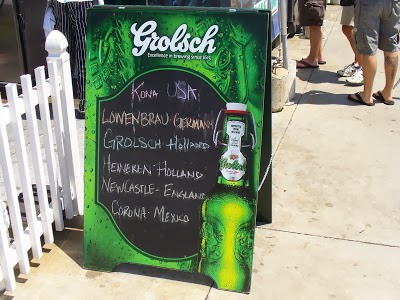
Stubborn Fact Department: Kona is Hawaiian for "crafty."

OMG, another great craft beer is coming to Kentucky! But before we wet our drawers, perhaps a few facts are in order.

First, we've all been here before, as attested by this PC posting from 2007: Beer-related despair for yet another year at Louisville Slugger Field.


Second: Kona's an AB-InBev pawn, plain and simple, and it's brewed nowhere near Hawaii for sale on the mainland. Even the press release craftily concedes the point by observing the place of Kona's brewing being "closest to market."

Not only is Kona out of town; it's also out of craft.

12 Craft Beers that Aren’t Really Craft Beers (March 7, 2013 at Refined Guy)

Kona was founded in 1994 and is supposedly the top-selling craft brew in the state of Hawaii. Of course, they aren’t really a craft brew, since they merged into the Craft Brew Alliance and are now 35% owned by AB.
Now, you may say, only 35%? That doesn’t give AB full control over the company, so why aren’t they still considered a craft brew? Well, the answer is that this 35% is enough to buy Kona into AB-Inbev’s powerful distribution network, and also enough to get favorable treatment in the marketplace—treatment that independent craft breweries don’t get.
So it’s not so much that Kona doesn’t still make good beer, or that they aren’t also still “local.” It’s just that, with the world’s largest beer company backing you, you can’t call yourself a craft brewery anymore.

Let's visit the irony-free zone, shall we? For Kona, it's a valuable marketing point to be brewed "closest to market," which of course local Kentuckiana breweries do every single day of their working lives, and yet when it comes to next-greatest-OMG sexiness, it's the non-craft contract beer from far away that scores style points on the red carpet.

Really? This is the world we created?


Sunday, March 17, 2013

Sun King's Clay Robinson: "We want full transparency so consumers know when they’re getting a true craft beer."

Sun King Brewing's co-founder, Clay Robinson, speaks to "craft versus crafty" in an excellent essay at the IndyStar. It reads to me like a state of the union address from the Brewers of Indiana Guild's next president; the annual meeting is in April, and I have to think Clay gets the nod if that's what he wants.

Competition makes Indy's beer better on St. Patrick's Day, by Clay Robinson (at IndyStar)

When I first got into making beer for a living, my reasons were simple: I wanted a job that would accept me as I am (I didn’t want to cut my hair or shave), and I wanted to end each day drinking good beer that I helped create. I didn’t plan to become a brewery owner, and I certainly never thought we would one day be on the radar of companies like Anheuser-Busch InBev and MillerCoors.

My partners and I opened Sun King Brewery in 2009. Over the past several years our business has grown beyond our biggest hopes. Meanwhile, the craft brewing industry got big enough that the giant beer conglomerates couldn’t ignore us. In fact, these days, they’re spending a lot of money trying to beat us.