Showing posts with label Prohibition. Show all posts

Sunday, October 23, 2016

Iraq, Prohibition, and how religion interferes with the proper enjoyment of life.

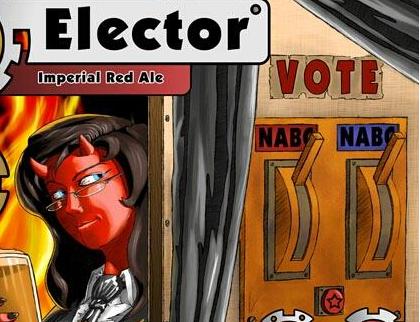
Nice beer name. Photo credit here.

If "god" created everything and fermentation is a natural process ...


Iraq's parliament passes law banning alcohol (Associated Press)

Surprise move has angered many in the country’s Christian community who rely on the business

Iraq’s parliament has passed a law forbidding the import, production or selling of alcoholic beverages in a surprise move that angered many in the country’s Christian community who rely on the business.

The law, passed late on Saturday night, imposes a fine of up to 25m Iraqi dinars (£17,000) for anyone violating the ban. But it’s unclear how strictly the law would be enforced, and it could be struck down by the supreme court.

Islam forbids the consumption of alcohol, but it has always been available in Iraq’s larger cities, mainly from shops run by Christians. Those shops are currently closed because of the Shia holy month of Muharram.


__

Tuesday, August 09, 2016

When the Smithsonian posted for a Beer Historian position ...


The Smithsonian's "help wanted" notice hit the airwaves on my birthday (August 3), and with lightning speed in social media posts, e-mails and candy-grams, a couple dozen of my friends very graciously urged me to go for it.

I'm flattered and humbled. Thank you very much for your thoughts.

However, I'm a realist, and all I've ever really wanted to do was make my own home base safe for better beer (and lots of other civic improvements, which I'll spare you in this beery context).

It goes back to that great (and unrealized) idea for Bank Street Brewhouse, the museum that never got off the ground.


ON THE AVENUES: Ice Cold WCTU (A Modest Proposal).

 ... The New Albany WCTU’s zenith was in the early 1900s, during its ultimately successful campaign for statewide and later national Prohibition. Fortunately, Prohibition’s myriad and well-documented failures served to discredit America’s teetotalers far better than my puny words ever could. Today, the craft brewing revolution flourishes in New Albany on the very same spot where beer’s enemies once conspired.

That’s delicious, and it’s why we need a monument to victory over the prohibitionists.


It's more water under yet another bridge, but the urge remains the same. I want to do things like this here, where I'm from -- teaching about beer, curating a beer museum, or something along these lines, perhaps in conjunction with selling beer, because drinking beer makes learning about beer far easier.

To all of you: I deeply appreciate your interest in my qualifications to work at the Smithsonian. I may be asking for your help to manage some small bit of something similar, here in New Albany.


What Does a Beer Historian Do?, by Susan Evans McClure (Smithsonian)

The American History museum’s latest job opening made headlines. But what does the job actually entail?

 ... Beer history is American history and a new historian joining the Smithsonian Food History team at the National Museum of American History will help the public make sense of the complex history of brewing. As part of the American Brewing History Initiative, a new project at the museum supported by the Brewers Association, the historian will explore how beer and brewing history connect to larger themes in American history, from agriculture to business, from culture to economics. Today, there are over 4,200 breweries in the United States, the most at any time since Prohibition. As American brewing continues to expand and change, and our understanding of beer in American history deepens, the Smithsonian is uniquely positioned to document the stories of American brewers and collect the material culture of the industry and brewing communities for the benefit of scholars, researchers and the public.

But what exactly does a brewing historian do?

__

Tuesday, December 15, 2015

Let the taps speak, because the blue law's gone, and Indiana's dry Christmas Day is no more.

Unrelated to the topic at hand, but cool.

Readers, hear my confession: I completely missed it. Totally; 100%. I did not know the law had been changed.

It's about time, isn't it?

Maybe the Freedom from Religion Foundation intervened. After all, the prohibition of alcohol sales on Christmas Day was a blatant imposition of selective religious blue law on what should be secular tippling.

Indiana may be a basket case, but at least this one's finally right.

Hoosiers can buy alcohol on Christmas for the first time since Prohibition (Fox59)

The Indiana Alcohol and Tobacco Commission (ATC) announced today you can buy alcohol on Christmas.

Although many businesses are closed on Christmas, restaurants, bars, liquor stores and grocery stores that are open will be allowed to sell alcohol to you.

Saturday, April 18, 2015

Al Smith, Prohibition and the "greatest political button of all time."


Coincidentally, this may be the greatest Mental Floss posting of all time. Prohibition wasn't so much about alcohol as bigotry, religion, prejudice and politics.

And yes, the pirate votes wet.

The Greatest Political Button of All Time (Mental Floss)

 ... Many of the Protestants (particularly Methodists, Southern Baptists and German Lutherans) who so feared the nefarious influence of Smith's Catholicism were also in favor of Prohibition. Al Smith was not.

Thursday, July 24, 2014

Where and why we need a monument to victory over the prohibitionists.

Over at my civic affairs blog, I have a fairly good idea. I think it's one of the best ideas I've had in a while. Here's the link:

ON THE AVENUES: Ice Cold WCTU (A Modest Proposal).


... The grand opening can be preceded by a community-wide art contest, in which local artists riff on a theme of fundamentalist zealotry. For the occasion, we might clear the former dining room of furniture and display the art there. Behind the art, through the window, lies the brewery, and if those machines kill fascists, surely they eradicate prohibitionists as well.

Thursday, December 27, 2012

Bet you didn't know about the "chemist's war of Prohibition."

Very seldom does one encounter a story like this; indeed, it has been little-told, and it deserves your full attention. These excerpts should be enough to make you angry, but after reading the entire essay, there'll be major outrage. Thanks to RC for bringing this to our attention.

The Chemist's War: The little-told story of how the U.S. government poisoned alcohol during Prohibition with deadly consequences, by Deborah Blum (Slate)

... Frustrated that people continued to consume so much alcohol even after it was banned, federal officials had decided to try a different kind of enforcement. They ordered the poisoning of industrial alcohols manufactured in the United States, products regularly stolen by bootleggers and resold as drinkable spirits. The idea was to scare people into giving up illicit drinking. Instead, by the time Prohibition ended in 1933, the federal poisoning program, by some estimates, had killed at least 10,000 people.

Although mostly forgotten today, the "chemist's war of Prohibition" remains one of the strangest and most deadly decisions in American law-enforcement history. As one of its most outspoken opponents, Charles Norris, the chief medical examiner of New York City during the 1920s, liked to say, it was "our national experiment in extermination."

The big enforcement issue during Prohibition was stolen industrial alcohol. The denaturing formula is hard reading, indeed.

To sell the stolen industrial alcohol, the liquor syndicates employed chemists to "renature" the products, returning them to a drinkable state. The bootleggers paid their chemists a lot more than the government did, and they excelled at their job. Stolen and redistilled alcohol became the primary source of liquor in the country. So federal officials ordered manufacturers to make their products far more deadly.

By mid-1927, the new denaturing formulas included some notable poisons—kerosene and brucine (a plant alkaloid closely related to strychnine), gasoline, benzene, cadmium, iodine, zinc, mercury salts, nicotine, ether, formaldehyde, chloroform, camphor, carbolic acid, quinine, and acetone. The Treasury Department also demanded more methyl alcohol be added—up to 10 percent of total product. It was the last that proved most deadly.

Monday, December 01, 2008

BBC's Prohibition Repeal Party is Friday, December 5.

Here's a press release from the gang at Bluegrass Brewing Company.

---

PROHIBITION REPEAL PARTY IS FRIDAY, DECEMBER 5TH

Bluegrass Brewing Company (Shelbyville Road) will celebrate the repeal of Prohibition on Friday, December 5th, with nickel beers. The festivities will include a free soup kitchen, BBC employees dressed in 1920’s apparel, and 1920’s era music to help set the ambiance.

The 18th amendment to the constitution banned all alcohol sales. This “prohibition” lasted for 13 years, from 1920 – 1933. The 21st amendment was enacted on December 5th 1933 and repealed the 18th amendment. The 21st amendment is the only amendment to the constitution that specifically repeals another amendment. BBC will halt alcohol sales for 13 minutes from 5:47 pm until 6:00 pm to simulate the 13 years of alcohol prohibition. From 6:00 pm until 7:00 pm we will celebrate with 1920s prices of nickel beers. The free soup kitchen will consist of bean soup and corn bread and will run from 6:00 pm until the soup runs out.

This annual celebration is one of Bluegrass Brewing Company’s most popular events so come out and join in the festivities. For more information please contact BBC at 899-7070.

Monday, May 05, 2008

Another NA (non-alcoholic) election day tomorrow.

Longtime readers have seen this one before, but it's appropriate to repeat these sentiments before each election. The text below is my latest reworking as published last week as a "Mug Shot" article for LEO (it appeared on Wednesday, April 30).

Needless to say: The Public House will not be open until 6:00 p.m. on Tuesday, May 6. Sportstime Pizza will observe regular hours beginning at 11:00 a.m., for what is destined to be an excruciatingly dry lunch. There'll be open seating at Prost from 6:00 p.m. to watch election returns on the big screen.

---

In 2008, Indiana's primary election takes place on May 6, and Kentucky's follows two Tuesdays later on May 20.

In both states, Election Day brings with it roughly eleven hours of state-mandated prohibition against the sale of demon rum, and consequently the bars can't open until the polls close. Of course, one might drink continuously until 3:30 or 4:00 a.m. election morning, and then nurse a carry-out six-pack or a bottle of single malt Scotch during the comparatively brief time it takes to watch an Adam Sandler DVD before crawling off in a stupor to vote when the polls open at six.

Presumably, this unwelcome vestige of an otherwise discredited social policy serves as a bulwark against the horrific possibility that unscrupulous politicos or their conniving agents might swap half-pints of Kessler (or a similarly valued slopping spree at the community's on-premise watering holes) in exchange for a poor wretch's vote.

As there exists no commensurate prohibition against the sale of strong black coffee, chocolate-covered Krispy Kremes and hickory-smoked bacon, apparently the veiled but very real threat of breakfast-induced bribery is not worthy of the same scrutiny as that posed by the insidious grape and the grain.

If you're hopelessly intoxicated after ingesting that half-pint of Kessler, are you really any more destructive to democracy than the perfectly sober voter who is following instructions provided by a fundamentalist preacher, who in turn has promised not temporal inebriation, but a favorable reference when the time comes to take up residence in heaven?

I think not, and hope you had the foresight to visit your favorite package store on Monday night. Otherwise, remember that the taps open at 6:00 p.m., and to quote Groucho Marx, then there'll be "dancing in the streets, drinking in the saloons, and necking in the parlor."

Monday, April 07, 2008

Press release from the Brewers Association: “75 Years of Beer.”

We wanted to take a moment, on this historic day, to thank all the breweries who are recognizing April 7, 1933 and 75 Years of Beer.

Historians note that Prohibition officially ended on December 5, 1933, with the ratification of the 21st Amendment. But earlier that year, newly-elected President Franklin D. Roosevelt took steps to fulfill his campaign promise to end the national ban on alcohol. He spurred Congress to modify the Volstead Act to allow the sale of 3.2 percent beer in advance of the Twenty-first Amendment being ratified. Thus on April 7, 1933 there was legal beer once again!

Media outlets such as the Washington Post, CNN.com and many more have just recently highlighted April 7, 1933 as a story worth covering. CNN.com even published a web link to 75yearsofbeer.org, so cheers to all who helped bring this day to the attention of many and cheers to the privilege of beer being back for 75 years!

Remember, too, American Craft Beer Week is May 12-18. The purpose of this week is to recognize the positive contributions of American brewers.

Tuesday, November 06, 2007

Another NA (non-alcoholic) election day.


(Crossposted at NA Confidential)

Don’t forget:

You must have an ID to vote – and to get served after you vote.

Don't forget:

If you're looking for a polling place, call the Floyd County Democratic Party at 812-207-7941.

Don't forget:

To quote Groucho Marx, when the taps finally open at 6:00 p.m., there'll be "dancing in the streets, drinking in the saloons, and necking in the parlor," at least until the sad reality of Dan Coffey's inevitable victory over write-in candidate Skittles the Cat begins to sink in. I'll likely be at Connor's Place for celebration and commiseration.

You've forgotten: The following first ran on May 2, 2006.

----

Another election day is here, and with it eleven hours of state-mandated prohibition against the sale of demon rum.

Presumably, this unwelcome vestige of an otherwise discredited social policy serves as a bulwark against the horrific possibility that unscrupulous politicos or their conniving agents might swap half-pints of Kessler (or a similarly valued slopping spree at a downtown tavern) in exchange for a poor wretch’s vote.

As there exists no commensurate prohibition against the sale of strong black coffee, chocolate-covered Krispy Kremes and hickory-smoked bacon, apparently the veiled but very real threat of breakfast-induced bribery is not worthy of the same scrutiny as that posed by the insidious grape and the grain.

If you’re hopelessly intoxicated after ingesting that half-pint of Kessler, are you really any more destructive to democracy than the perfectly sober voter who is following instructions provided by a fundamentalist preacher who has promised not temporal inebriation, but a favorable reference when the time comes to take up residence in heaven?

Nope, me thinks you're not. We hope you thought ahead and visited your favorite package store on Monday night.

Cheers ...

Thursday, April 05, 2007

April 7, 1933.


There’s an important date on the horizon. Read more about it in my article this week for the Louisville Eccentric Observer (LEO):

Mug Shots: Good beer isn’t hard to find.

Chances are you didn’t know that in 1933, as the cherished day of Repeal drew ever nearer, President Franklin Delano Roosevelt persuaded Congress to alter the detested Volstead Act and permit low gravity beer to be consumed by a grateful public. It would be another eight months before wine and liquor joined the queue … The date was April 7, 1933, and 74 years later, this important “Brew Years Eve” anniversary of beer’s liberation will be celebrated by America’s resurgent craft breweries.